
Shepherds of Good Hope Diversion Pilot Project Proves Successful
In late 2024, Shepherds of Good Hope partnered with the Alliance to End Homelessness Ottawa and the City of Ottawa on a diversion pilot project, a groundbreaking initiative toward transforming Ottawa’s shelter system to better meet the needs of our community.
During the pilot project, which started in early 2025, Shepherds of Good Hope case managers and frontline staff were trained with new diversion tools in our shelter programs.
What is shelter diversion?
This is an approach that helps people who are seeking emergency shelter by helping them identify and access safe and appropriate housing arrangements in their community, instead of entering a shelter.
Diversion does not mean “no” to people seeking shelter; rather it involves taking the time to ask the right questions to determine if all other safe options have been explored. The answers to these questions can prevent people from enduring the stress and trauma that may be associated with accessing an emergency shelter.
What did we learn from the diversion pilot project?
- Our staff achieved a 22% successful diversion rate, helping people avoid the shelter completely – this is more than double our previous average success rate
- 36% were NEW to Ottawa’s shelter system
- 67% of those diverted did not return to the shelter system, during and up to six weeks after the pilot project
- 100% of those diverted to supportive housing stayed housed
- 11 days is the average stay for those diverted from the shelter during the pilot project (compared to the average adult stay of 90 days in the Ottawa shelter system – an 79 day drop in average length of stay)
- $6,500 (on average) savings to the system were attained based on the average cost of diversion supports ($38 per person) vs the average cost of a nightly shelter stay ($86 per person)
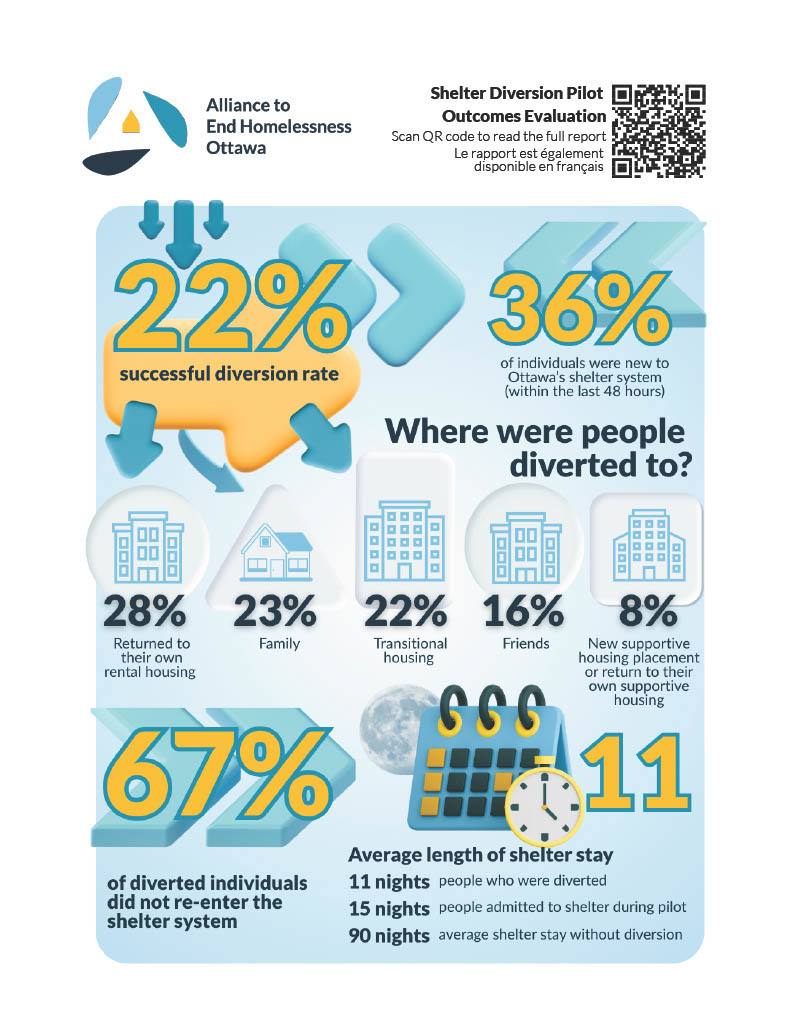
The newly released Diversion Outcomes Evaluation Report, produced by the Alliance to End Homelessness Ottawa, outlines how effective diversion strategies, when implemented ethically and intentionally, can reduce returns to homelessness, strengthen community connections, and ensure shelters are used only when truly needed.
“This report reflects a growing shift in how we respond to homelessness, one grounded in dignity, possibility, and the belief that housing is meant for all,” says Alliance Executive Director, Kaite Burkholder Harris. “When we invest in diversion and rapid re-housing, we are choosing hope over crisis management and building a system that helps people move forward, not just get by.”
“When we intervene early, support people properly, and use shelters in a more thoughtful way,” says Shepherds of Good Hope CEO Stephen Bartolo, “we know that fewer people will become homeless in the first place.”
This project has created a potential pathway for all shelters in Ottawa to adopt a coordinated, system-wide model with better outcomes for the people we serve, the community, and to the dedicated people who administer frontline care.