

Connection to Family – A Trip to the National Gallery of Canada
Noah and Ty (Tyootsie)Tunnillie’s family lived a nomadic life, eventually moving to Cape Dorset, which is now known as Kinggait, Nunavut.
Inuit families are close-knit, providing the foundation for a strong cultural identity, a link to their ancestors and a bridge to individual and cultural survival. The connection to the environment is deep-rooted, allowing them to thrive in one of the most beautiful places on earth.
The Power of Art
Noah remembers sitting beside his mother, Oviloo Tunnillie, as she magically transformed blocks of serpentine stone and marble into beautiful works of art.
He would watch as the green-veined stone, harvested from the earth, would turn into mythological creatures, hunters and the animals they’d see in their daily life.
Oviloo honed her craft, making her work valuable to admirers and collectors around the world.
“She would sell her art so we could buy tools, guns and ammunition to help us,” remembers Noah.
Despite the hard work of shaping, cutting, grinding, sanding and polishing – often by hand – Oviloo persisted in her craft. The art world took notice, bringing Oviloo international acclaim, with several of her pieces included in the permanent collection at the National Gallery of Canada.
Reconnecting – A Trip to the National Gallery of Canada
Noah and Ty both live at Shepherds of Good Hope, so did their sister Alasuaq before she passed away in 2022. The Inuit community in supportive housing at Shepherds is growing, representing about 17% of the 320 people currently living in buildings across the city.
When the Gallery learned they were the sons of Oviloo Tunnillie, they worked tirelessly to arrange an opportunity for the brothers and reconnect with pieces they haven’t seen for decades.
In a brightly lit room overlooking the Ottawa River, where Noah sometimes goes to paint the water, Gallery staff carefully laid out several pieces of Oviloo’s art.
The room was silent as Noah and Ty circled the table, carefully picking up the intricate pieces, flipping them over and travelling back in time to the moments they helped shape some of her iconic work.
“She would shape them up, outside,” recalls Noah, pointing in particular to a large carving of three intertwined polar bears. “That one was with all hand tools, no electrical tools. With axe, file, and sandpaper.”
“This one was way before we born,” says Ty referring to an intricate and connected depiction of Arctic Char, Sedna, the Female Goddess of the Sea, and a helper.
Finding the Inspiration
“She had to see the stone,” says Noah describing his mother’s process. “What kind of shape it was before, and then they came out as she was working on it.”
It is a long way from Cape Dorset to Ottawa, and the Tunnillie brothers lives have been shaped by the many experiences they’ve had along the way, but like the art their mother created, the beauty of family and connection to the earth continues to guide them.
When asked how he felt about being there, Noah replied with one word; “Gratitude”.
You can read Bruce Deachman’s article in the Ottawa Citizen here.
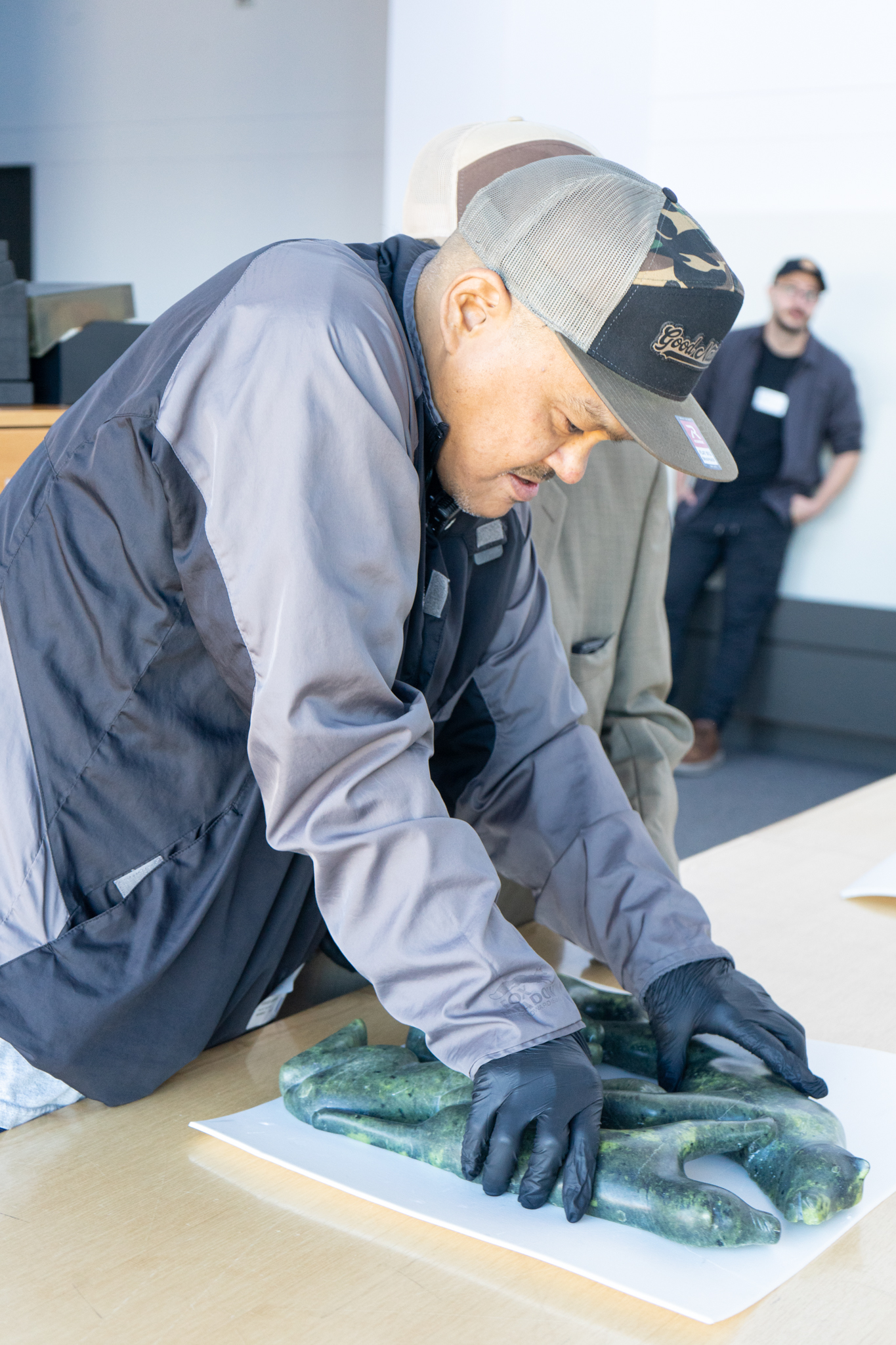
Noah gets up close and personal with some of the art he helped his mother create
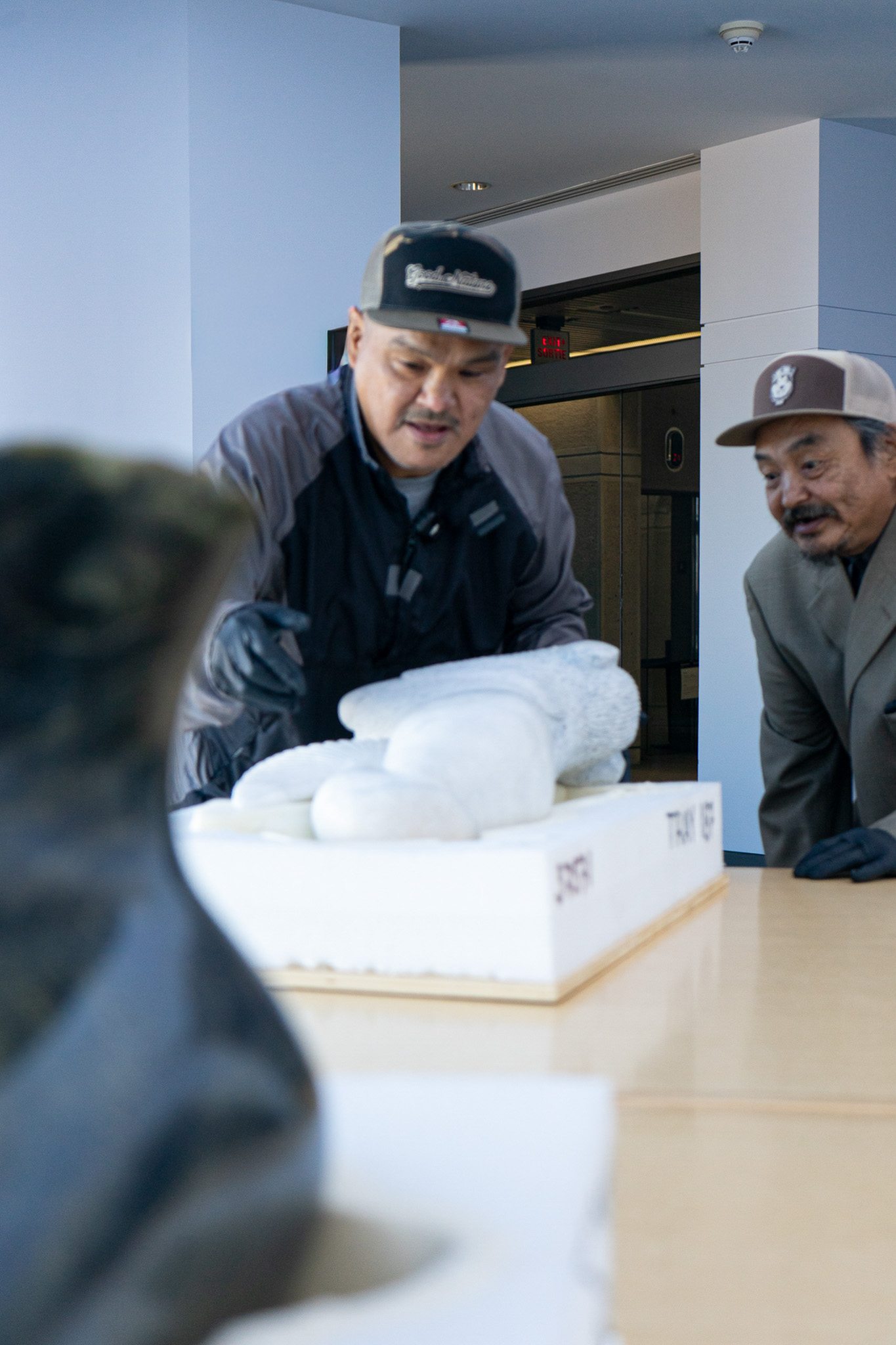
Noah lifts one of his mothers’ marble carvings
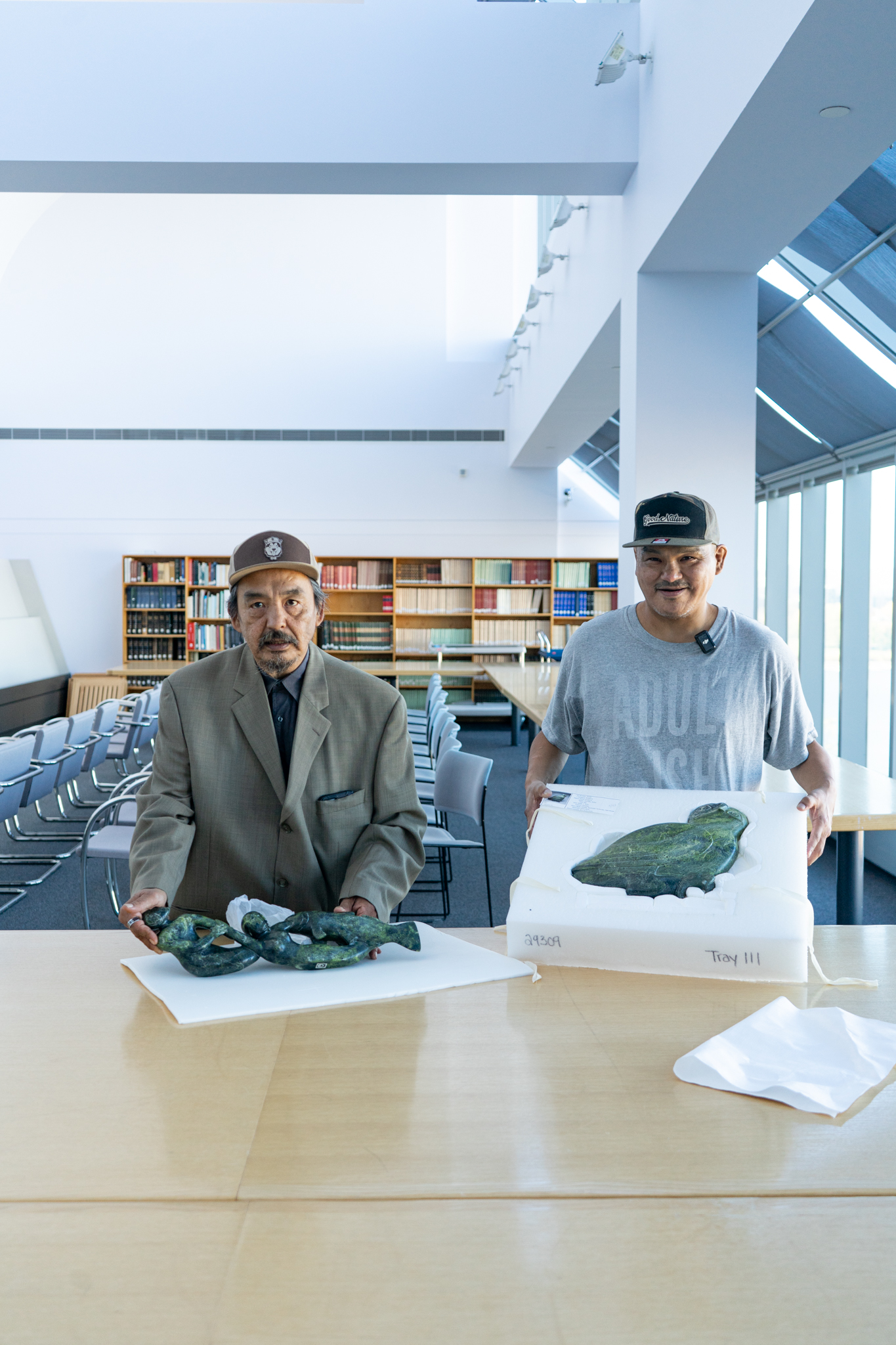
Ty and Noah spend an emotional moment in the National Gallery of Canada, with their mother Oviloo’s iconic art work
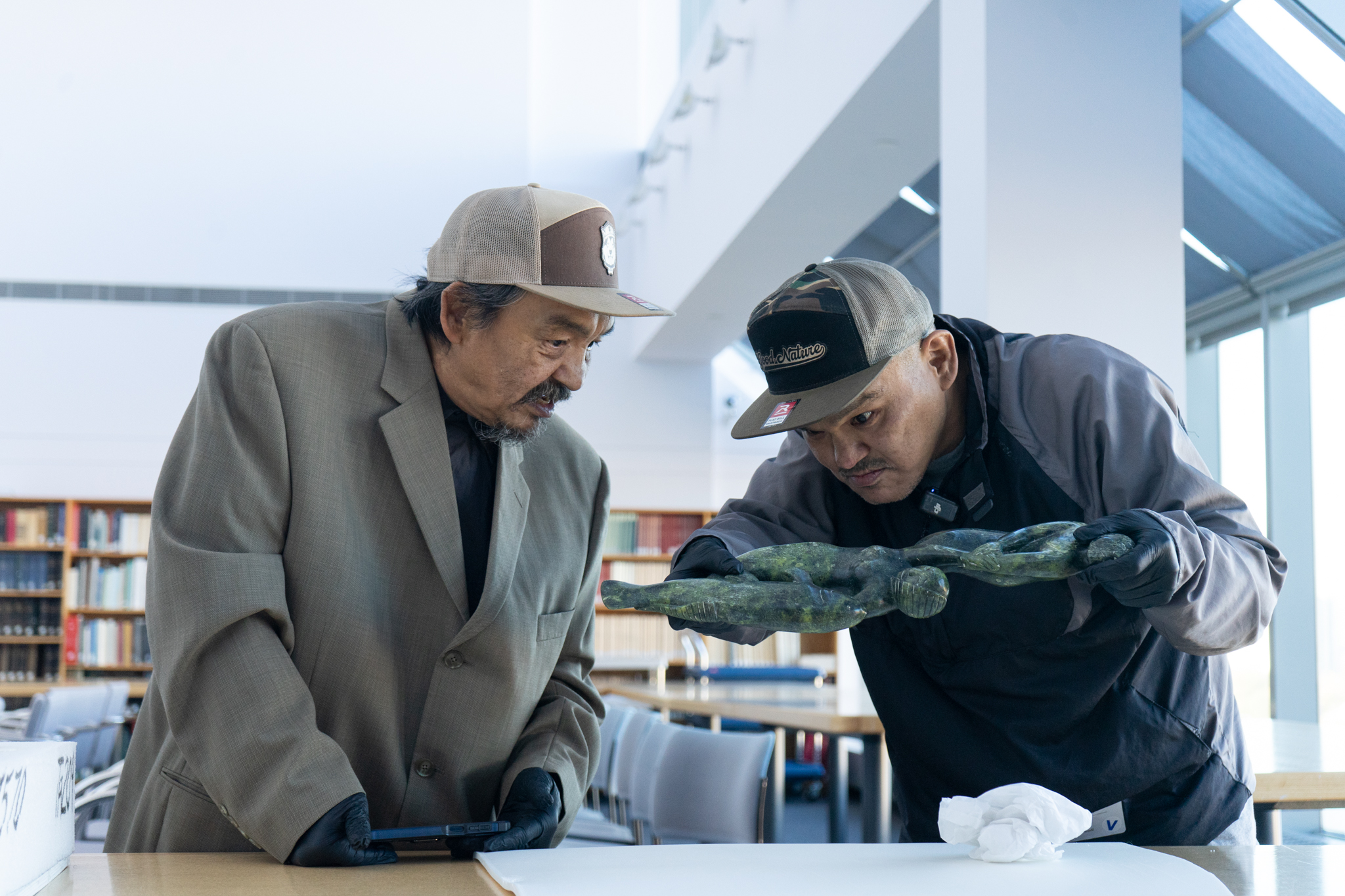
Noah and Ty inspect a carving made out of serpentine